A Practical Guide for Distributors and Importers

Introduction

For wholesale distributors and equipment importers, choosing a commercial oven manufacturer is a long-term business decision rather than a one-time purchase.

In real distribution and OEM projects, issues such as inconsistent specifications, unstable lead times, or limited customization support often only become visible after the first few orders. These factors can directly affect market reputation and long-term cooperation.

Beyond pricing, distributors need to evaluate product consistency, supply stability, customization capability, certifications, and after-sales support when selecting a manufacturing partner.

This guide is written for commercial kitchen equipment distributors, wholesalers, and importers who are evaluating manufacturers for long-term cooperation, OEM projects, or regional distribution.

Understanding Wholesale Requirements in Commercial Oven Supply

Wholesale distribution has very different requirements compared to retail or single-unit purchases.

Distributors typically need:

  1. Consistent product specifications across batches
  2. Stable long-term production capacity
  3. Predictable lead times
  4. Support for documentation, certifications, and logistics

A manufacturer suitable for wholesale supply must be able to scale production while maintaining consistent quality standards.

Key Factors Wholesale Buyers Look for in an Oven Manufacturer

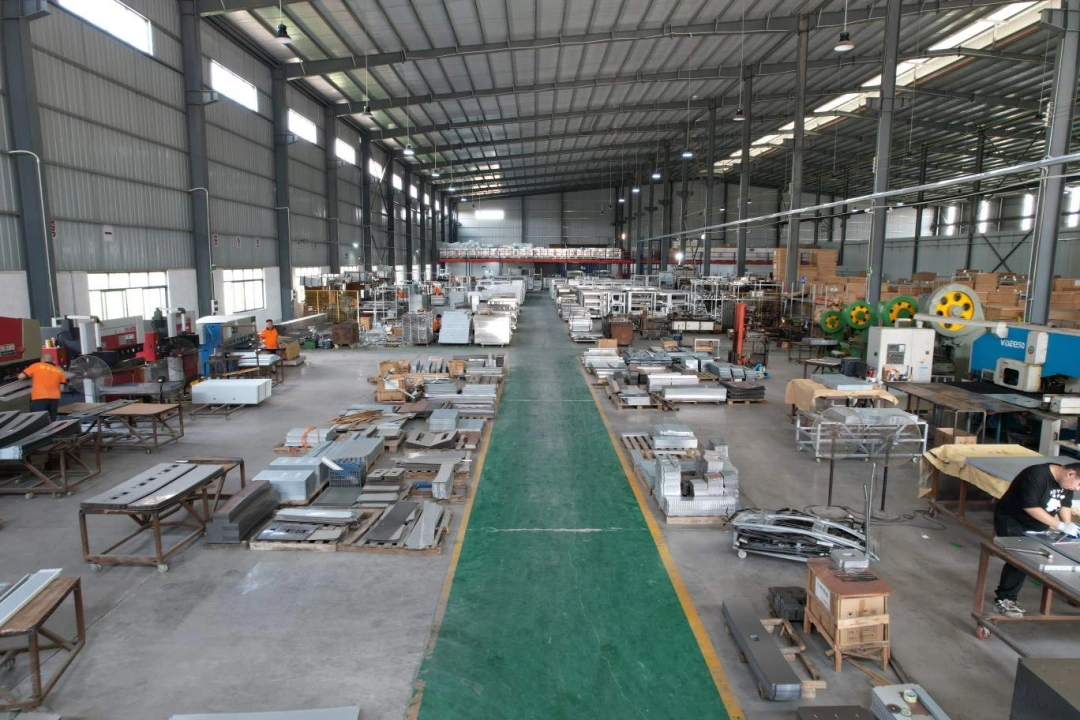
Manufacturing Capacity and Scalability
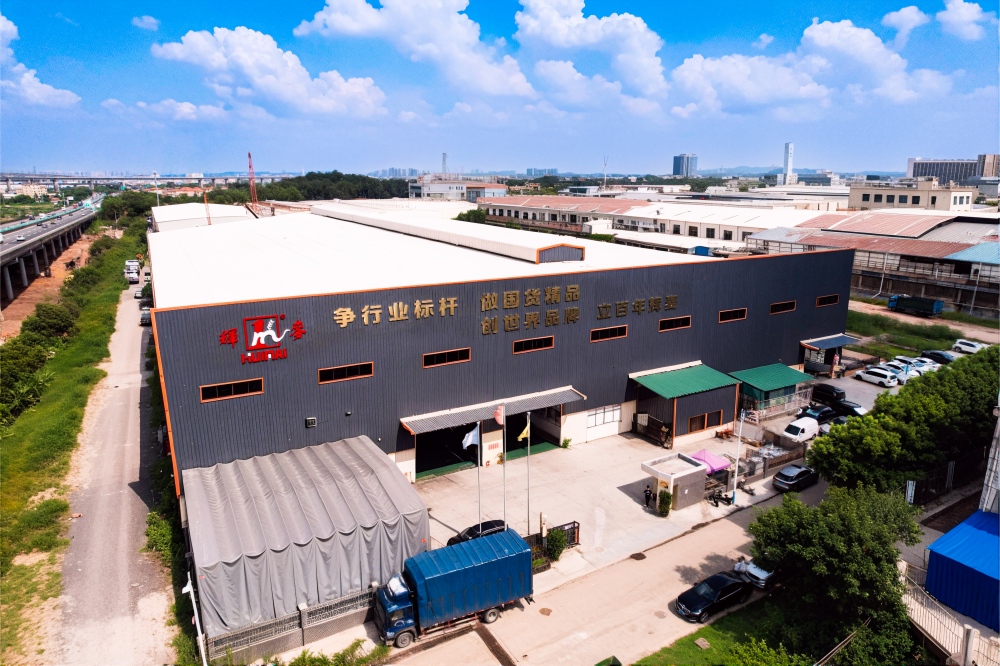
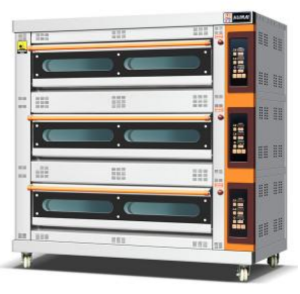
alt=“中国第一生产厂家””

Distributors often start with smaller trial orders and gradually scale up. A qualified manufacturer should demonstrate:

  1. In-house production capability
  2. The ability to increase output without changing core specifications
  3. Stable supply of key components
  4. Scalability reduces the risk of supply disruption as your market grows.

In practice, manufacturing capacity is not only about monthly output figures.

For OEM or private label projects, factors such as tooling preparation, component sourcing, certification testing, and packaging confirmation often have a greater impact on production schedules—especially for initial orders.

Based on our experience, once specifications and key components are standardized, repeat orders usually become more stable and predictable in terms of lead time.

Quality Control Consistency
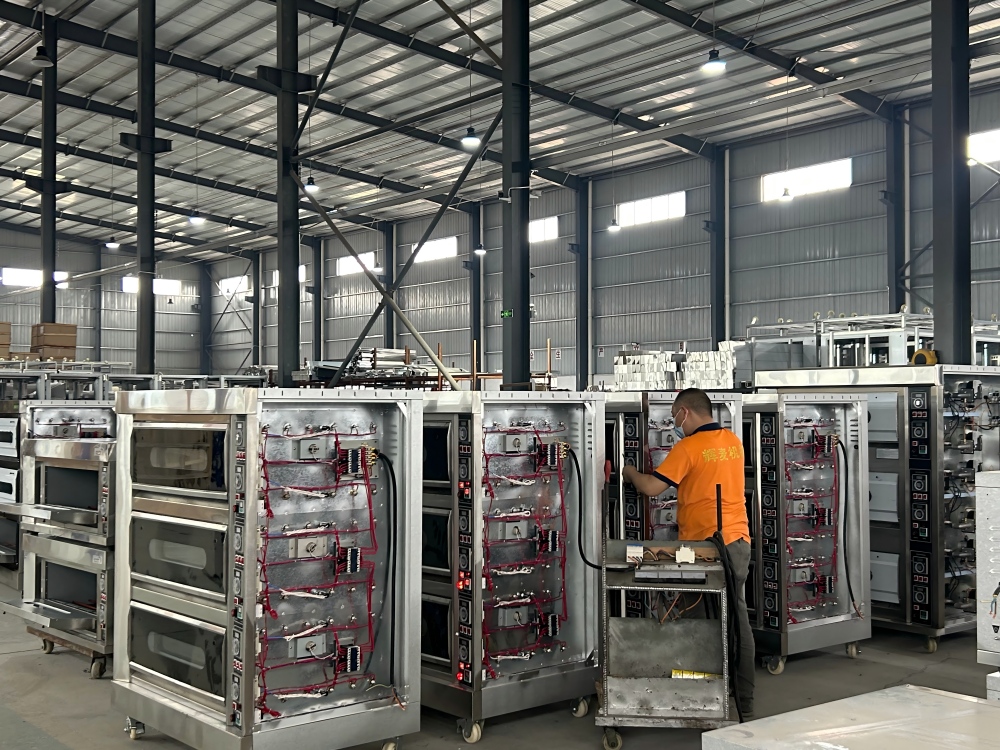
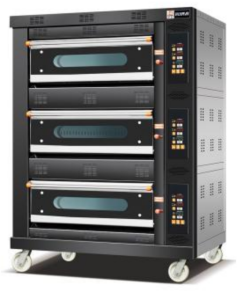
alt="OEM第一生产线"

Commercial oven quality inspection process

For wholesale distribution, consistency is more important than individual unit performance.

Key indicators include:

  1. Standardized production processes
  2. Documented quality inspection procedures
  3. Stable material sourcing

This ensures that products delivered today will match those supplied months or years later.

For distributors, quality control consistency reduces the risk of after-sales disputes and technical support pressure.

Clear inspection standards and repeatable testing procedures help ensure that products delivered today will match those supplied in future batches, even as order volumes increase.

Customization and OEM Capability
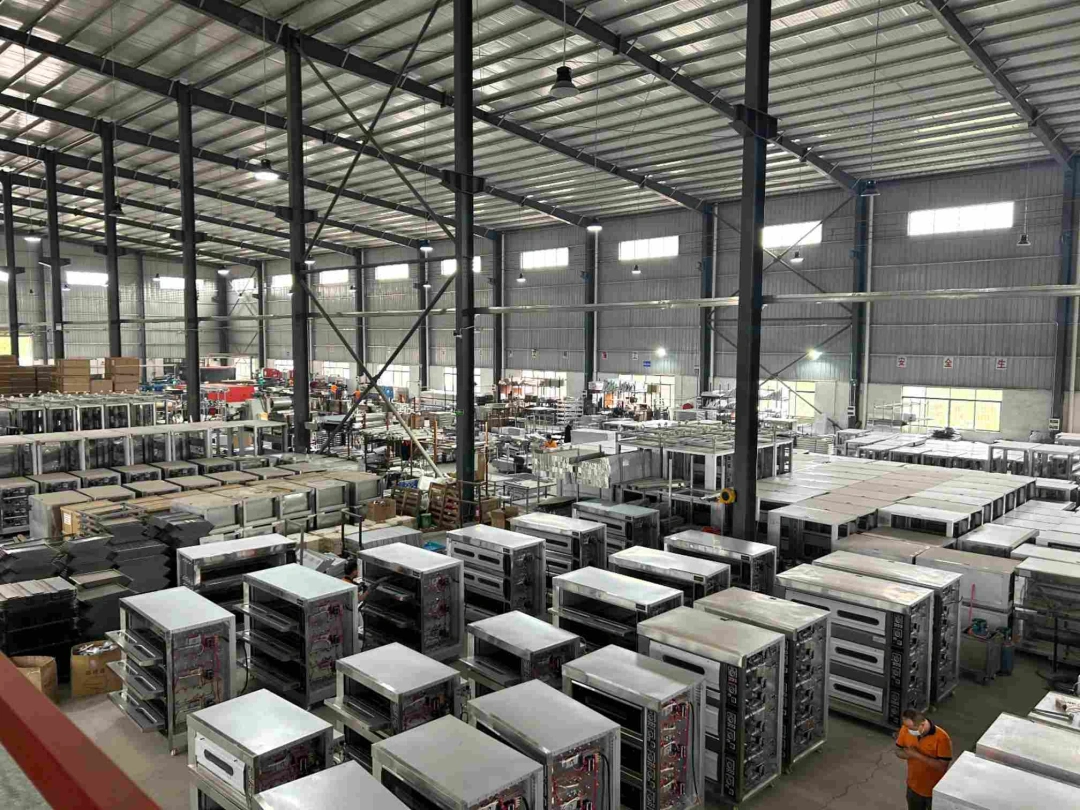
alt="OEM第一生产线'

OEM commercial oven production line

Many distributors require OEM or private label options to support local branding.

Common OEM requirements include:

  1. Logo and branding customization
  2. Control panel language and layout
  3. Electrical specifications for different markets
  4. Packaging customization

In OEM projects, not all types of customization affect cost and lead time equally.

For example, logo printing or packaging adjustments are usually straightforward, while customized control panels, electrical configurations, or market-specific compliance requirements often require additional testing and preparation.

Clarifying customization priorities early helps reduce delays and unnecessary revisions during production.

Distributors planning OEM or private label projects often benefit from preparing a clear specification list before contacting manufacturers.

Certifications and Market Compliance

Compliance with international standards is essential for importers and distributors.

Typical certifications may include:

  1. CE certification for European markets
  2. ETL or equivalent certifications for North America
  3. Compliance with local electrical and safety regulations

Working with a manufacturer familiar with export certification processes can significantly reduce regulatory risk.

Lead Time, Logistics, and Export Experience
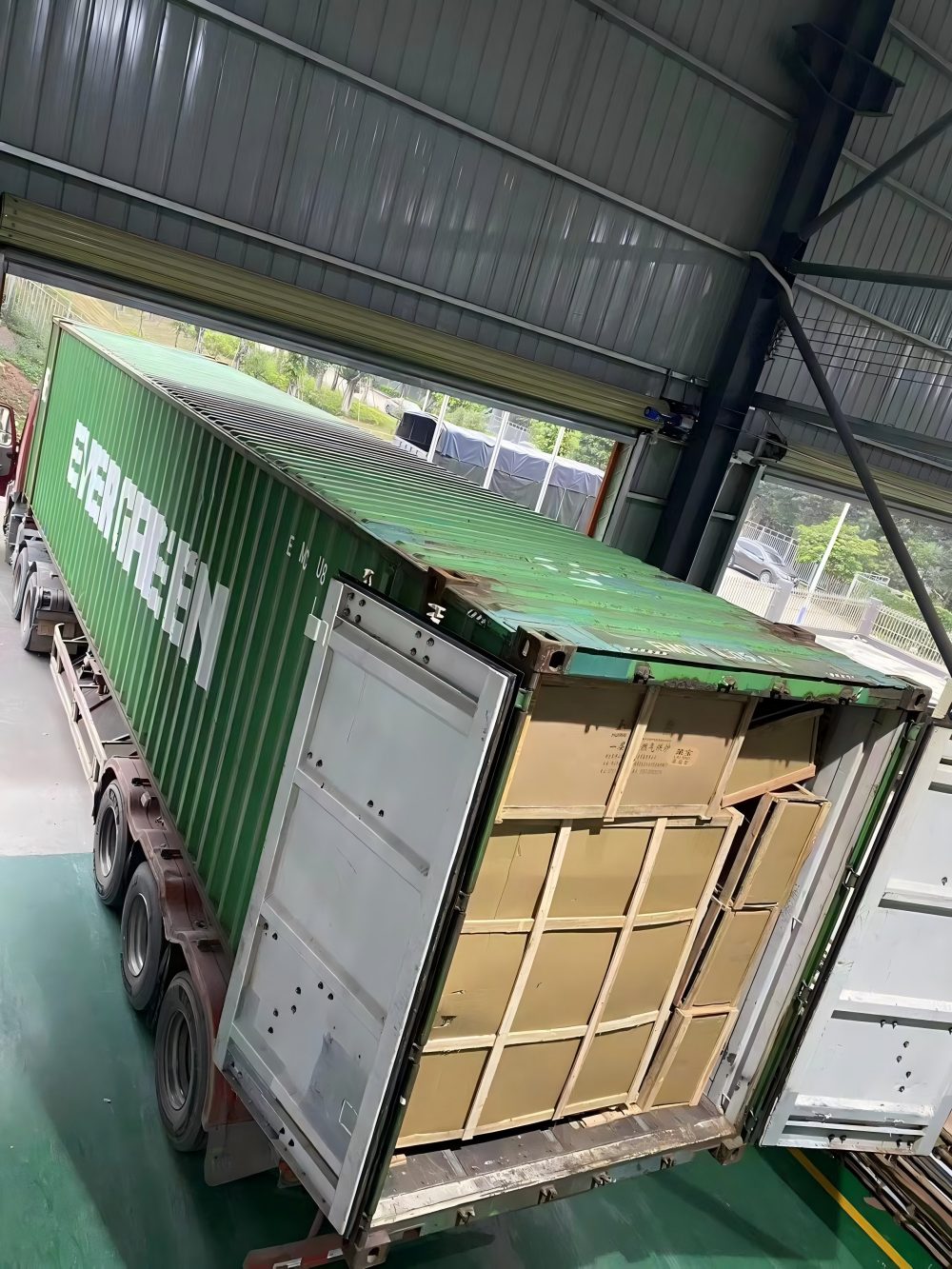
alt=“commercial oven manufacturer production line ”

Commercial oven export container loading

Reliable delivery timelines are critical for wholesale planning.

Distributors should evaluate:

  1. Standard production lead times
  2. Flexibility for urgent orders
  3. Experience with international shipping and export documentation

Manufacturers with hands-on export experience are generally better prepared to handle documentation requirements, packaging standards, and communication during customs clearance.

This experience becomes increasingly important as order volumes grow or when supplying multiple regional markets.

After-Sales Support Structure

After-sales support is a common concern among distributors sourcing from overseas manufacturers.

A suitable wholesale manufacturer should provide:

  1. Clear warranty terms
  2. Technical documentation and manuals
  3. Remote technical support for distributors and service partners

This structure allows distributors to support end customers efficiently without relying on the manufacturer for every service request.

OEM and Private Label Options for Distributors

OEM cooperation is increasingly common in the commercial oven market.

Typical OEM projects may involve:

  1. Custom exterior design or branding
  2. Market-specific configurations
  3. Distributor-exclusive product models

Manufacturer vs Trading Company: What Distributors Should Know

When sourcing commercial ovens, distributors often choose between working directly with a manufacturer or through a trading company.

Manufacturers typically provide better control over product specifications, production schedules, and OEM customization, while trading companies may offer a wider product range but have limited involvement in the manufacturing process.

For distributors planning long-term cooperation or private label projects, understanding this difference can help reduce supply chain risk and improve consistency.

MOQ, Lead Time, and Order Planning

Minimum order quantity (MOQ) and lead time vary depending on product complexity and customization level.

In many cases:

  1. Initial orders may have higher MOQs due to setup requirements
  2. Repeat orders often benefit from reduced lead times
  3. Forecast-based production planning helps optimize costs

Distributors should discuss long-term order planning early to ensure alignment with the manufacturer’s production schedule.

Common Mistakes Distributors Make When Choosing Manufacturers

Based on industry experience, distributors often face issues due to:

  1. Focusing solely on unit price rather than total supply cost
  2. Overlooking certification and compliance requirements
  3. Ignoring long-term production capacity
  4. Underestimating the importance of after-sales support

Avoiding these mistakes can significantly reduce operational and financial risk.

Final Thoughts

Choosing a commercial oven manufacturer for wholesale distribution is a strategic partnership decision. The right manufacturer offers not only competitive products, but also reliable production, customization flexibility, and long-term support.

For distributors planning sustained growth, working with a manufacturer experienced in wholesale and OEM supply can improve supply chain stability and market competitiveness.

Looking for a Long-Term Manufacturing Partner?

For distributors evaluating long-term cooperation, the selection process usually begins with understanding manufacturing capabilities, OEM feasibility, and supply stability.

Clarifying these factors early can make future cooperation more efficient, predictable, and scalable.

Learn more about our commercial baking oven solutions here.https://www.huimaibake.com/about-us/

Commercial Oven Wholesale FAQs

Q1: What should distributors look for in a commercial oven manufacturer?
Distributors should focus on production capacity, quality consistency, certifications, OEM capability, and long-term supply stability.

Q2: Can commercial oven manufacturers support OEM projects for wholesalers?
Many manufacturers offer OEM and private label services, including branding, configuration customization, and packaging support.

Q3: What is a typical MOQ for wholesale commercial ovens?
MOQ varies by product and customization level. Initial orders may be higher, while repeat orders often benefit from more flexible quantities.

Q4: How important is export experience when choosing a manufacturer?
Export experience is critical, as it ensures smoother logistics, compliance handling, and communication across international markets.
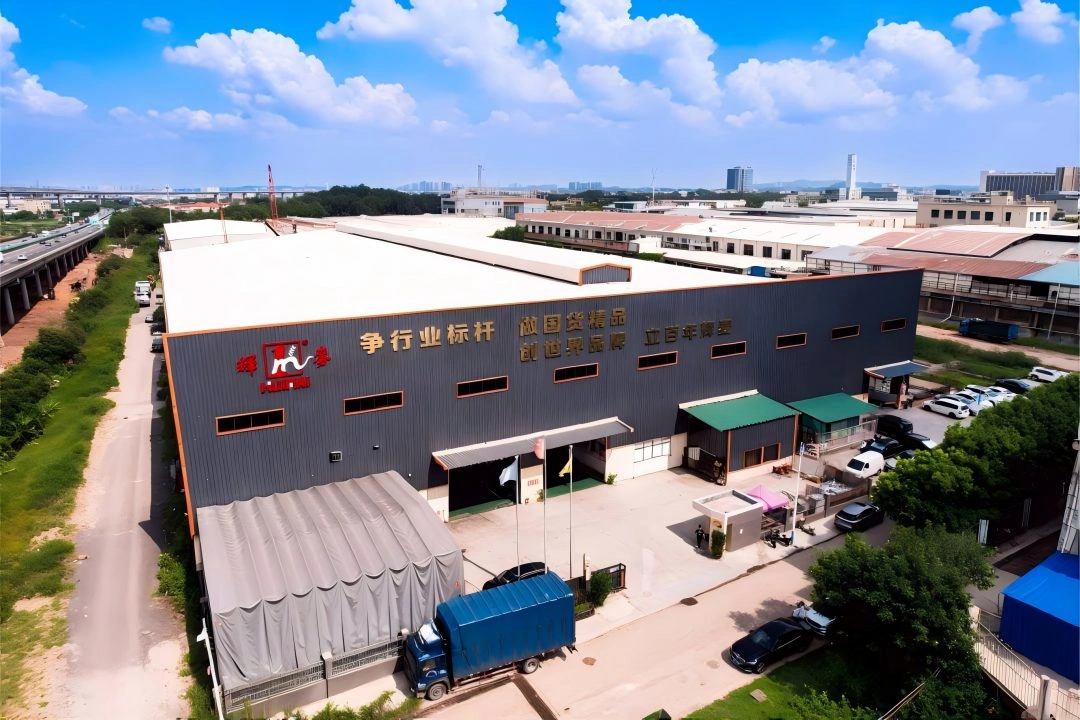
As a manufacturer with 15 years of experience in the commercial oven market, we understand the core needs of dealers: worry-free sales, stable profits, and high customer retention. However, many manufacturers focus solely on inventory overstocking and lack tangible support, leaving dealers struggling—due to after-sales issues, uncompetitive pricing, or reputational damage caused by seasonal shortages. Today, we’ll explore three key factors in selecting a manufacturer, grounded in dealer perspective, which form the foundation of our long-term partnerships with over 200 dealers nationwide.

First, examine the strength of the supply chain: Can commercial ovens be sold at low prices with guaranteed profits?

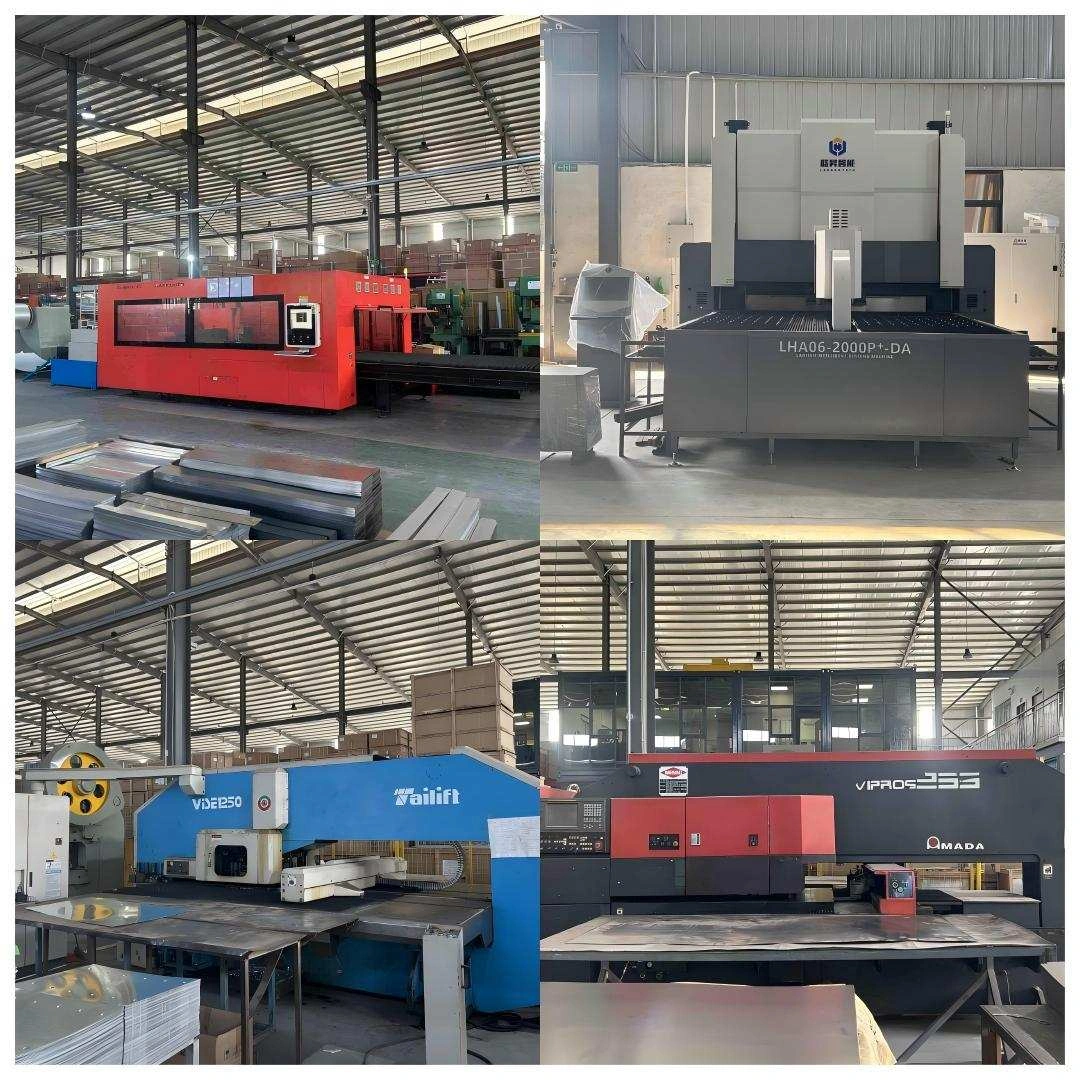
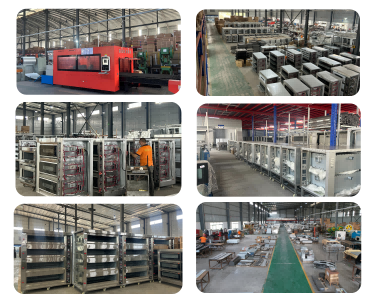
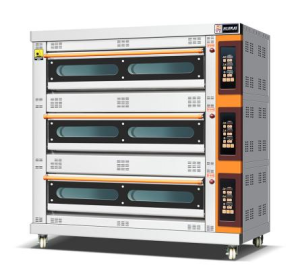
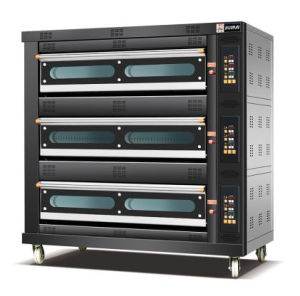
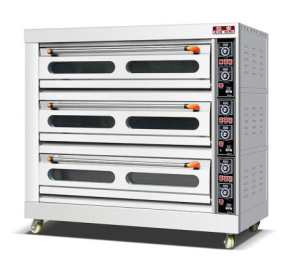
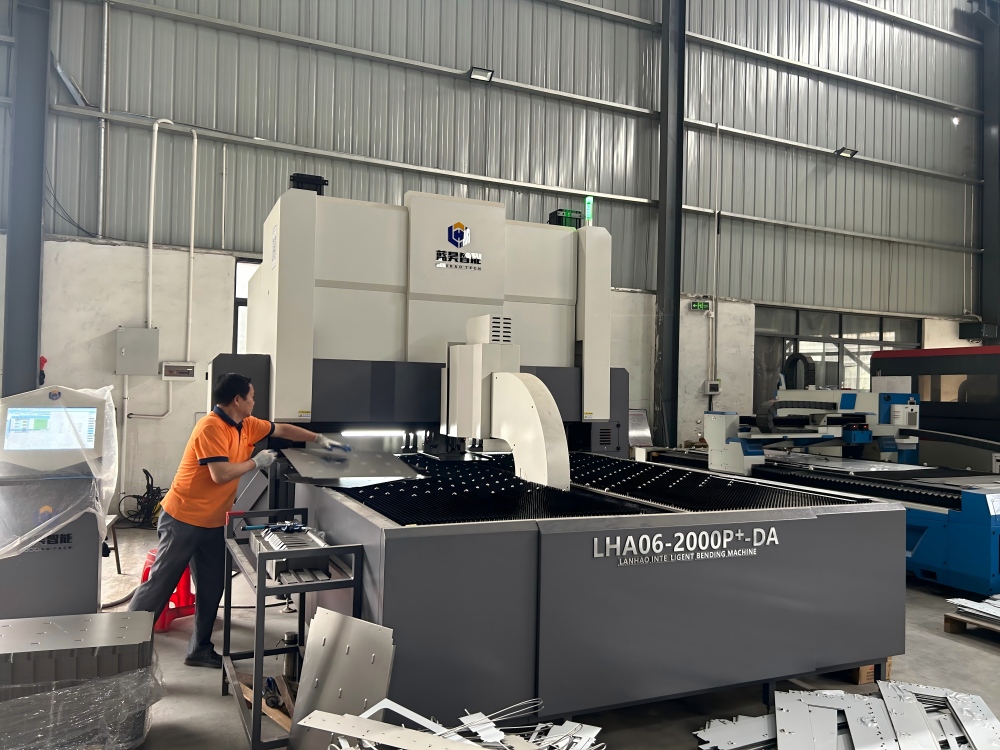
Distributors’ profit margins depend heavily on the efficiency of the manufacturer’s supply chain. Our 10,000-square-meter production facility not only offers scale but also ensures low costs and high turnover, which directly impacts the pricing and delivery of our commercial ovens and deck ovens. Automated production enhances our pricing advantage. Our automated press brakes increase stainless steel sheet utilization from 70% (manually) to 92%, reducing raw material costs per order.

Commercial deck oven production has decreased by 15%. Our fully automatic punching machine can produce 5,000 heat dissipation holes per hour (equivalent to the work of three skilled workers), reducing labor costs by 20%. These savings translate into discounts: for a three-deck commercial deck oven of the same specifications, our supply price is 8%-12% lower than that of small factories, yet with higher profit margins. Our large-scale production capacity ensures peak season supply for commercial ovens. Before peak seasons like Mid-Autumn Festival and Christmas, our production line reaches a daily output of 100 units, and our 5,000-square-meter warehouse stocks 3,000 standard models. Last Mid-Autumn Festival, a distributor placed an expedited order for 200 commercial deck ovens, which were produced and shipped in just five days, significantly faster than the 15-day wait time they had previously faced at a small factory. During inspections, consider asking, “What is the monthly production limit for commercial ovens?” and “What is the lead time for standard commercial deck ovens?” Concrete figures, rather than vague promises, can help seize peak opportunities.

Second, evaluate product competitiveness: Can commercial ovens “sell well and provide worry-free after-sales service”?

A dealer’s reputation depends on its products. A popular commercial deck oven must meet the requirements of “customer recognition” and “convenient after-sales service,” both of which are achieved through the manufacturer’s rigorous process control. Consistent quality minimizes after-sales issues with commercial ovens. Our commercial deck ovens utilize Chinese food-grade electrolytic plates, which undergo a rigorous “three-polishing and three-inspection” process to ensure the coating remains intact for five years. Heating element installation tolerances are within 2 cm, keeping our after-sales service rate below 3% (compared to the industry average of 8%). A dealer who has worked with us for five years stated that they spend less than two hours per month on commercial oven after-sales service, saving valuable business time. Standardized parts make commercial deck oven repairs faster. Core components (heating tubes, thermostats, and fans) are universal. Distributors with a stock of five universal parts can resolve 90% of commercial oven repair issues. Last year, a customer’s commercial deck oven fan malfunctioned, and the local dealer replaced it within two hours, compared to the three days required for a custom part.
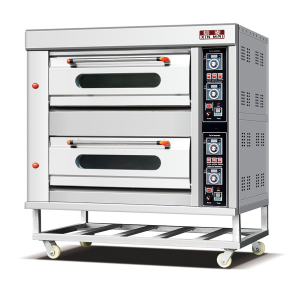
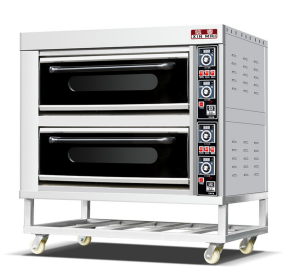
Third, consider cooperative support: Can they become a “business booster” for commercial oven dealers?

For dealers, excellent manufacturers are more than just suppliers; they’re partners. Over the past 15 years, we’ve built a dealer empowerment system to provide comprehensive support for commercial oven dealers, from customer acquisition to after-sales service. We offer customized solutions to help clients win key accounts for commercial deck ovens. We share marketing resources to reduce customer acquisition costs: we provide product brochures, catalogs, test reports, and case studies for commercial and commercial deck ovens.

Finally: Distributors and manufacturers have common interests.

Our 15 years of experience prove that we’re more than just a bridge between buyers and sellers; we’re a successful community. Our 10,000-square-meter factory, automated equipment, and rigorous processes help dealers achieve “low-cost, easy-sale, and stable profits” for commercial ovens and deck ovens. If you’re looking for a high-quality commercial oven supplier, we welcome you to visit our factory. Learn how our automated production lines reduce costs, how “three polishings and three inspections” ensure the quality of our deck ovens, and how our 5,000-square-meter warehouse ensures inventory. We’re ready to turn our 15 years of experience into a competitive advantage for you—your success is our greatest achievement.

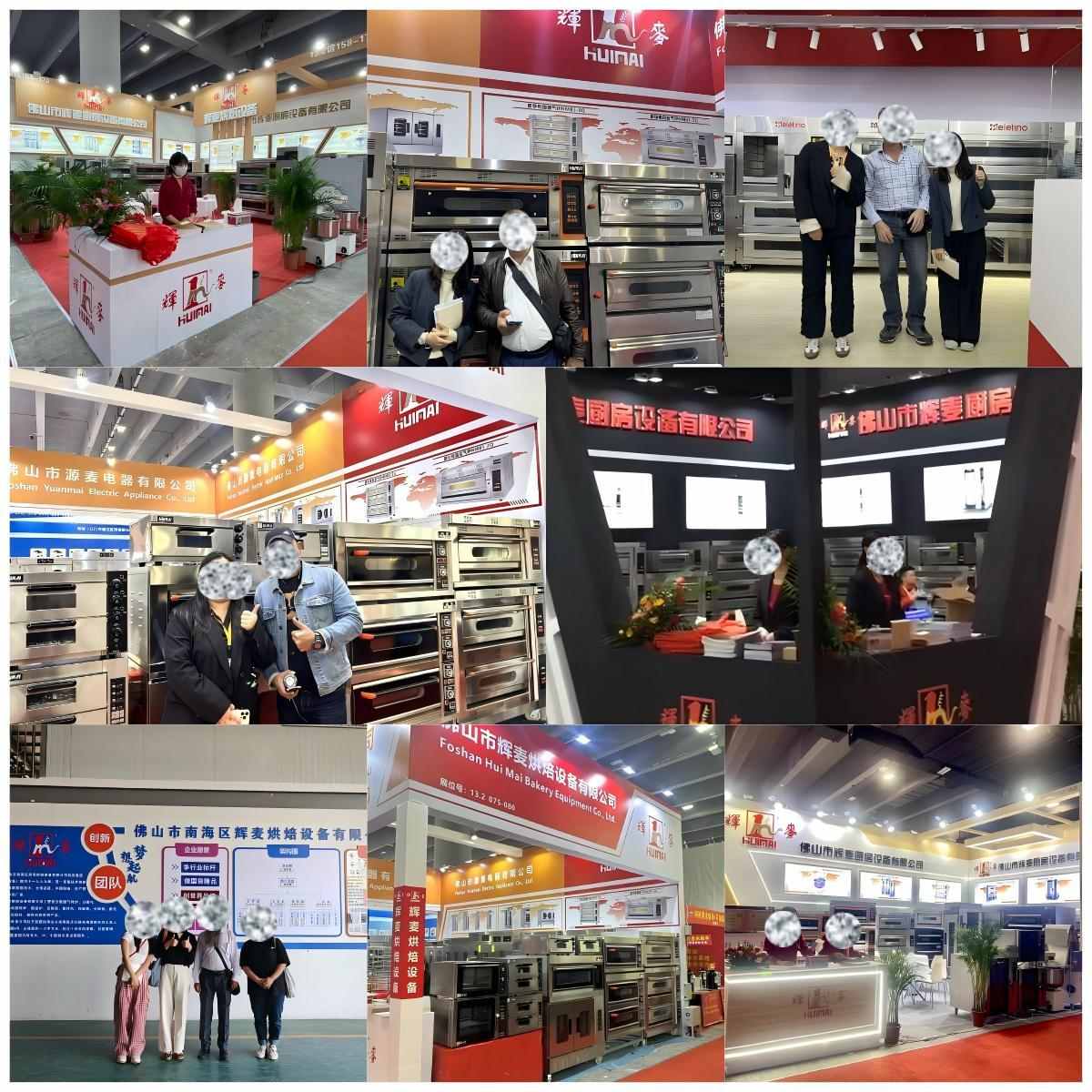
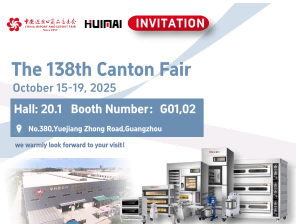
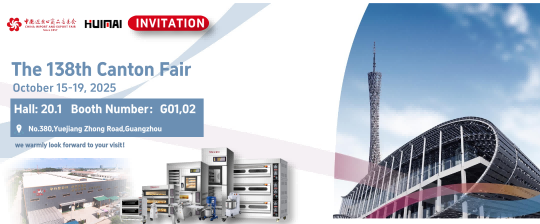
We are excited to announce that we will be participating in the 138th China Import and Export Fair (Canton Fair) from October 15th to 19th, 2025.

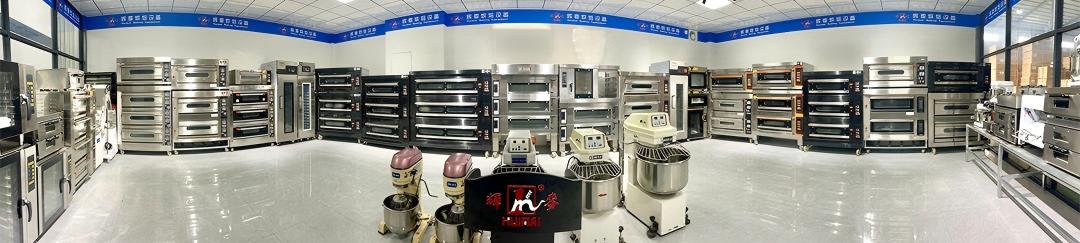
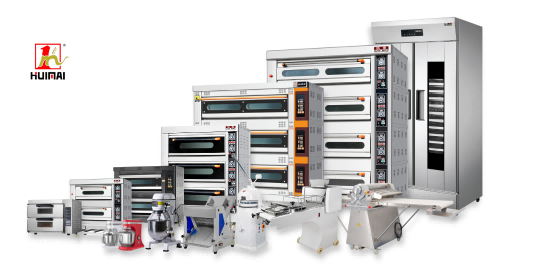
At our booth located in HALL 20.1, stands G01 and G02, we will be presenting a comprehensive range of professional commercial baking equipment.

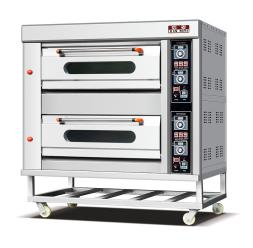
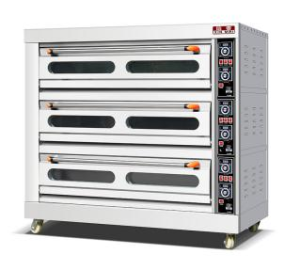
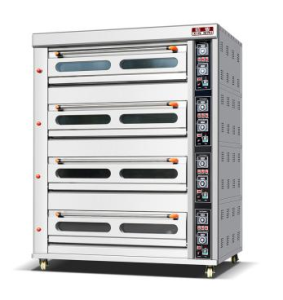
  • Commercial deck oven
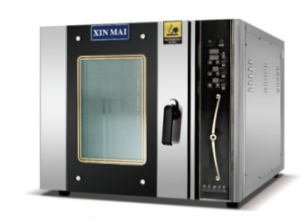
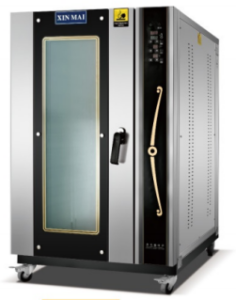
  • Convectionoven
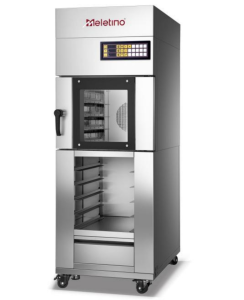
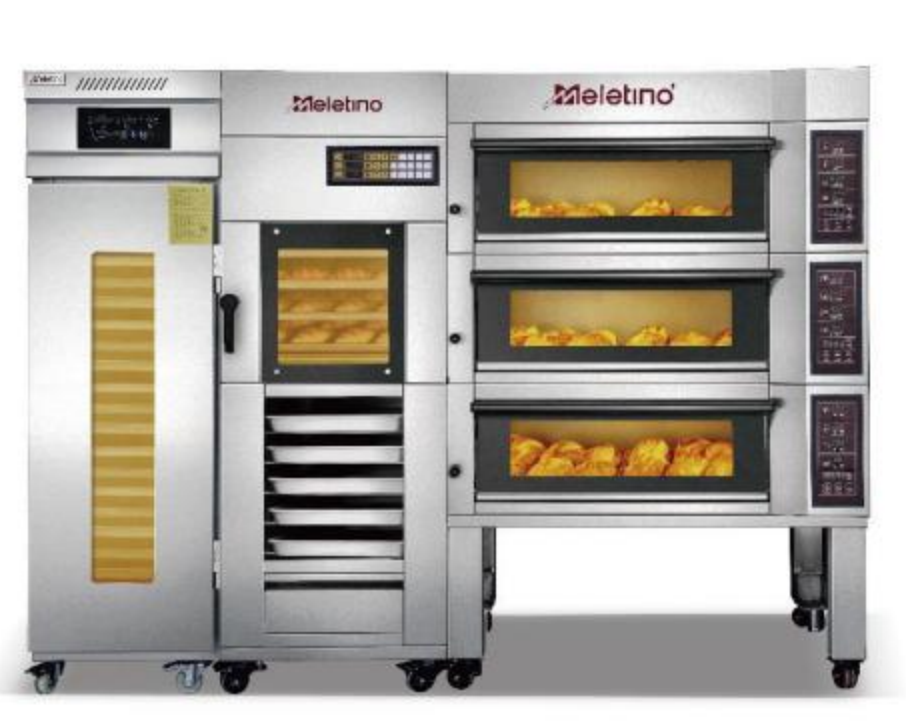
  • Combination oven
  • Dough mixer
  • Egg beater
  • Shortening machine
  • Blocking machine

With 15 years of proven production experience, a 10,000-square-meter production facility and automated machinery, each piece of equipment undergoes factory testing before shipment. We guarantee both on-time delivery and quality while guaranteeing the best pricing.

The 138th Canton Fair is set to gather numerous industry players from around the world, making it a hub of business activity and innovation. We look forward to welcoming you at HALL 20.1G01, 02, and exploring mutually beneficial opportunities together. Mark your calendars for October 15th – 19th, 2025, and we anticipate a fruitful and engaging interaction with you at the fair.

Have you ever stood in your bakery, staring at that shiny new oven you just bought, and realized it’s completely wrong for your needs? You’re not alone. Just last month, I watched a talented baker like you spend $30,00 on a fancy convection oven that couldn’t give her sourdough the steam it desperately needed. Let’s make sure you dodge that bullet.

Why Your Oven Choice Makes or Breaks Your Dream

You know that feeling when everything in your bakery flows perfectly? That’s what happens when you choose the right commercial baking oven. But here’s what you need to understand – your oven isn’t just another piece of equipment. It’s the beating heart of your operation, the workhorse that’ll either multiply your success or become your expensive nightmare.

Think about it: Your recipes are perfect. Your team is trained. But if your oven can’t keep up or burns through energy like a furnace, you’re fighting an uphill battle every single day.

Here’s what’s really at stake:

  • Your daily output could drop by 30% with the wrong capacity
  • Your energy bills might shock you (I’ve seen bakers’ jaws drop at bills 40% higher than expected)
  • Your signature products could lose their magic touch with inconsistent baking

Know Your Bakery’s Soul Before Your Oven’s Specs

Before you get dazzled by fancy features and sleek designs, let’s dig into what really matters for your bakery. You need to ask yourself some honest questions:

What gets you excited about baking? Is it those perfect croissants that sell out by 9 AM? Your artisanal bread line that has customers lining up around the block? Write it down. This is your bakery’s soul, and your oven needs to match it.

Quick Reality Check:

  • Count your daily production needs (be realistic, not optimistic)
  • List your signature items – the ones that bring in most of your revenue
  • Think about your peak hours – when do you need your oven to perform at its best?

Remember Tom from Sunset Bakery? He got starry-eyed over a massive deck oven because “bigger is better,” right? Now it sits half-empty most days, eating into his profits with every hour it’s heated. You’re smarter than that. You’re going to make your decision based on real numbers and real needs.

Oven Types You Need to Know (But Nobody Explains Well)

You’re about to face a barrage of technical specs and fancy features. Let’s cut through the noise. Here’s your insider’s guide to what each oven type really means for your daily life:

Convection Ovens: Your Versatile Friend

Remember how you fell in love with baking? It probably started with a convection oven. Here’s what you need to know for the commercial version:

  • Perfect for your croissants, pastries, and cookies
  • You’ll spend between $985-$4,000
  • Pro tip: Watch that fan strength – it can turn your delicate meringues into a disaster

But here’s what the salespeople won’t tell you: Your breads might not get that perfect crust you’re dreaming of. The circulating air can sometimes dry out your products faster than you’d like.


Deck Ovens: The Artisan’s Choice

If you’re serious about artisanal breads, you’ve probably been eyeing these beauties. They’re like the sports cars of the baking world:

  • You’ll get that perfect crust on your sourdough
  • Expect to invest $135-$1500
  • The stone deck gives you that authentic hearth-baked quality

But let’s be real: They’re space hogs, and they can drink energy like it’s free. You’ll need to plan your production schedule carefully to make the most of each deck.

The Hidden Costs That Could Sink Your Ship

You know that sticker price you’ve been fixating on? It’s just the tip of the iceberg. Here’s what you really need to budget for:

Installation Surprises:

  • Basic installation: $100-$500(and that’s if everything goes smoothly)
  • Ventilation requirements that might force a kitchen redesign
  • Electrical upgrades you didn’t see coming

The Real Energy Story: You could be looking at a 30% difference in energy costs between similar models. That $1000 you saved on the purchase price? It might cost you double in energy bills over five years.

Making Your Final Choice (Without Losing Sleep)

Think you’ve found your perfect match? Hold that purchase order. You’re about to enter my favorite part of the process – the reality check phase. I call it the Triple-Check Method, and it’s saved countless bakers from costly mistakes.

Start by visiting three bakeries using your dream oven. Don’t just pop in for a quick look. Spend time during their morning rush. Feel the heat distribution yourself, and don’t be shy about asking for their monthly energy bills. This real-world experience is worth more than any spec sheet.

Next, test drive your core products. Bring your recipes and run a full batch. Pay attention to consistency across different shelf levels. Remember Maria’s story from earlier? She skipped this step and regretted it for months.

Finally, crunch those 5-year numbers. Break down your purchase price into monthly payments, multiply those energy costs by 60 months, and get maintenance estimates from current users. This simple math might surprise you – and save you thousands.

Watch for These Warning Signs

You wouldn’t buy a car from a dealer who won’t let you test drive it. Don’t buy your commercial baking oven without proper vetting. When a sales rep starts pushing “limited time offers” or dancing around energy consumption questions, take a step back.

The most telling red flag? Vague service contracts. That fancy European oven might look amazing, but if you can’t get parts within 24 hours, you’re looking at thousands in lost revenue. Your service contract needs rock-solid guarantees for emergency support and parts availability. Just ask James from Downtown Breads – his three-day oven breakdown taught him this lesson the hard way.

The Bottom Line

Your commercial baking oven isn’t just an equipment purchase – it’s a 10-15 year relationship. Take your time. Do your homework. The perfect oven aligns with your production needs, space constraints, and budget reality. Think of it as choosing a business partner rather than buying equipment.

Your old convection oven just ruined another batch of croissants, and you’re fed up. You’re not alone. But here’s the good news – you’re about to make a decision that will transform your bakery’s output, quality, and bottom line.

When you choose your next commercial baking oven, you’re not just buying equipment. You’re investing in your bakery’s future. And with prices from $150 to $30,00, you need to know exactly what you’re getting into.

Understanding Your Production Needs

Before you dive into oven specs and features, you need to get clear on your bakery’s real needs.

Take a look at your daily production numbers. What are you baking now? More importantly, where do you want these numbers to be in two years? You might outgrow your new oven sooner than you think if you only focus on today’s output.

Your product mix will shape your oven choice more than any sales pitch. Maybe your sourdough brings in 40% of your revenue. Or your Danish pastries sell out every morning by 9 AM. Each product needs specific baking conditions, and you’ll need an oven that delivers exactly what your signature items demand.

You also need to consider your space and power supply. That dream oven won’t help if it doesn’t fit your kitchen or if your electrical system can’t handle it. Measure your space twice – width, depth, and height. Check your power supply capacity. You don’t want surprises during installation.

Convection Ovens: Your Daily Workhorse

When you’re eyeing a convection oven, you’re looking at the most versatile option in the market. These ovens work hard for you – handling everything from delicate pastries to hearty breads.

At $750-$4000, they’re your entry point into professional baking. But don’t let that price range fool you. A well-chosen convection oven can meet 80% of your baking needs if you’re running a mixed-product bakery.

Want the real scoop? Your convection oven will give you:

  • Even baking across multiple shelves (when you need those 200 muffins done perfectly)
  • Quick heat recovery between batches
  • Lower energy bills compared to deck ovens
  • Flexibility to adjust fan speeds for different products

But you need to know the downsides too. Your artisan breads won’t get that perfect crust. Your delicate pastries might dry out if you’re not careful with fan speeds. And if you’re planning to focus heavily on artisan breads, you might want to keep reading about deck ovens.

Deck Ovens: Your Path to Artisan Excellence

You’ll fall in love with a deck oven the moment you see your first perfectly crusted sourdough emerge from its chambers. At $700-$40,000, it’s a serious investment. But when your customers crack into that crispy baguette crust, you’ll know it’s worth every penny.

The stone deck beneath your loaves recreates the traditional hearth-baking environment. Your breads develop that professional shine, perfect crust, and the kind of oven spring that makes other bakers jealous. And because you control each deck independently, you’re running different products at their ideal temperatures.

Yet there’s something you need to understand: Your deck oven demands attention. You’ll need to master temperature management, steam timing, and loading techniques. Consider this your gateway to bakery mastery, not just another equipment purchase.

Rack Ovens: When You’re Ready to Scale

Your business is growing, and those 50 loaves a day won’t cut it anymore. Now you’re talking hundreds, and your rack oven becomes your best friend. Think about rolling in entire racks of products at once – no more shuffling trays around.

The beauty of your rack oven lies in its consistency. Load up 20 shelves of croissants, set your program, and each one comes out identical. You’re saving time, reducing labor costs, and maintaining quality across larger batches.

Combination Ovens: Flexibility Meets Efficiency

You want it all – the versatility of convection, the steam of a deck oven, and the consistency of digital controls. Your combination oven delivers exactly that. At $2000-$3000, it’s your most expensive option, but also your most adaptable.

Think about switching from bagels to pastries to bread without changing ovens. Your combination oven handles the transitions smoothly, giving you precise control over heat, steam, and airflow for each product. You’re essentially getting three ovens in one footprint.

The catch? You’ll need to invest time in training. Your team needs to understand multiple cooking methods, digital programming, and maintenance procedures. But once they master it, you’ll have the most flexible baking setup possible.

Making Your Decision: Practical Steps Forward

Your investment deserves careful consideration. Start by mapping out your typical production week. Calculate your hourly output needs during peak times. You’ll quickly see if that smaller oven will leave you scrambling during holiday rushes.

Remember your numbers:

  • Initial cost ÷ monthly production capacity = your cost per unit
  • Energy consumption × local rates = true running costs
  • Installation + ventilation + electrical = real startup costs

Your space matters too. Map your kitchen layout carefully. You need room to load, unload, and maintain your oven without creating bottlenecks in your workflow.

Hidden Costs You Must Consider

Beyond your purchase price, factor in:

  • Your power bill will likely increase by 20-30% with any new commercial oven
  • Maintenance contracts run $1,200-$2,500 annually
  • Emergency service calls cost $300-$500 each
  • Installation might require electrical upgrades

Your Next Steps

Book test bakes at three different bakeries using your target ovens. Bring your own recipes. Watch how the oven performs during peak production times. Ask about energy bills, maintenance issues, and daily cleaning routines.

Get quotes from multiple suppliers. But don’t just compare prices – look at service coverage, parts availability, and emergency response times. A cheaper oven with poor service support will cost you more in the long run.

The Bottom Line

Your new commercial baking oven is a 10-15 year commitment. Take your time. Run your numbers. Test-drive your options. Your perfect oven matches your production style, space constraints, and growth plans.


You’re all set for the morning rush. Your dough is proofed, your team is ready, but your commercial baking oven isn’t heating right. Your heart sinks. Every minute of downtime costs you money and disappoints your customers. But don’t panic – you’re about to learn exactly how to handle this.

When your oven acts up, you lose an average of $500-1,000 in product and sales per day. But here’s the good news: you can solve many common problems yourself, often in minutes. Your quick action now saves thousands in emergency service calls later.

Common Temperature Issues That Kill Your Production

Your oven’s temperature problems show up in three ways: slow heating, temperature swings, or cold spots. Each has distinct causes and solutions.

When your oven takes forever to heat up, check your power supply first. You’d be surprised how often a tripped breaker or loose connection causes this. Head to your electrical panel and verify all switches are fully on. Next, check your door seals – even a small gap drains power like a broken dam.

Your temperature swings tell you something’s wrong with either your thermostat or heating elements. If your digital display shows one temperature but your separate oven thermometer shows another, you need calibration. You can often recalibrate yourself – check your manual for the exact steps for your model.

Finding cold spots in your oven? Rotate a test batch of cookies through different rack positions. Mark where products bake unevenly. Your heating elements might be failing, but before you call service, check your oven’s position. Even a slight tilt can cause uneven heating.


Steam System Troubles That Ruin Your Bread

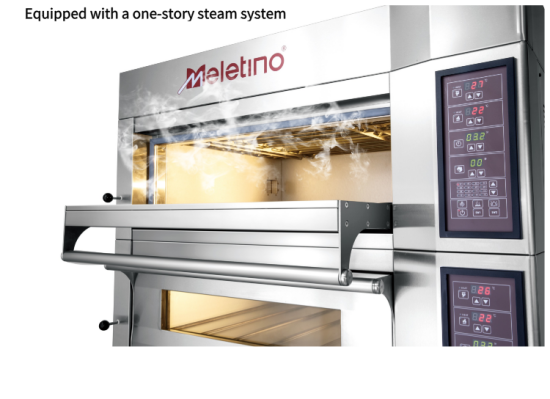
Your steam system makes or breaks your bread quality. When it fails, your crusts suffer first. You’ll notice either too little steam, uneven distribution, or water pooling at the bottom.

Check your water line pressure first – you need at least 30 PSI for proper steam generation. Clean your steam nozzles weekly – mineral buildup is your biggest enemy. Use white vinegar solution for cleaning, not harsh chemicals that corrode the system.

Your drain line often causes sneaky problems. If water backs up into your oven, you’ve got a clogged drain. You can often clear this yourself with a drain snake, but wear heat-resistant gloves – that water’s hot.

A proper steam system should give you a blast of steam within seconds of activation. If there’s a delay or weak output, descale your system monthly. Mix one part vinegar to three parts water, run it through your steam cycle, then flush with clean water twice.

Control Panel Malfunctions You Can Fix

Your control panel is flashing error codes. Your stomach drops. But before you reach for the phone, try these proven fixes.

“000”: This usually means the thermostat is faulty. Check the power connection first—make sure the plug is secure. If the issue persists, you’ll likely need to replace the thermostat.”HHH”: This indicates the sensor might be damaged or improperly connected. Power down the oven completely for 2 minutes, then restart. If the error remains, check the sensor connection for any loose or damaged parts. Replace the sensor if needed.

Still stuck? Contact technical support to keep your operations running smoothly!

Your digital display goes dark? Check your voltage regulator. Low power kills control panels faster than anything else. Test your outlet voltage – it should read between 220V or 380V. Lower readings mean you need an electrician, not an oven technician.

Door and Seal Issues Costing You Money

Your oven door isn’t sealing right. You feel the heat escaping. Every gap in your door seal wastes 20% more energy. Run your hand around your door’s edge – you’ll feel where heat leaks out.

Check your door hinges first. Loose hinges mean uneven closure. Tighten all hinge bolts with your oven cold. If your door still hangs unevenly, adjust your latch mechanism. Two turns clockwise usually does it.

Your gaskets take the most abuse. Replace them when they’re compressed to half their original thickness. Don’t wait – damaged gaskets spike your energy bills and cause uneven baking. New gaskets cost $14-20, but save you triple that in energy costs.

Essential Maintenance Steps You Must Take

Your daily cleaning routine prevents 80% of major problems. Wipe down your door seals every night. Clean spills immediately – they burn into permanent damage. Empty your steam generator’s sediment trap daily.

Weekly maintenance takes 30 minutes but saves hours of downtime:

  • Test your door seals with the paper test
  • Clean all steam nozzles and injection ports
  • Check electrical connections for signs of heat damage
  • Run your calibration cycle with an empty oven

Monthly deep cleaning protects your investment. Descale your steam system. Clean behind your control panel vents. Documentation matters – keep a maintenance log. When you need service, this log saves diagnostic time and money.

Your Emergency Response Plan That Works

When your oven fails during peak hours, you need a backup plan. Keep these essentials ready:

Build relationships with two bakeries in your area. They can help with emergency baking when your oven’s down. Sure, it costs more, but it beats disappointing your regular customers.

Stock these critical spare parts:

  • Door gaskets
  • Temperature sensors
  • Control panel fuses
  • Heating element connections

Keep three service numbers on speed dial – your regular technician, an emergency backup, and your oven manufacturer’s support line. Test these numbers monthly. Technicians change jobs, and you can’t afford to discover dead numbers during a crisis.

Fast-Action Steps When Things Go Wrong

Your response in the first 15 minutes of an oven problem determines your downtime length. Follow this quick checklist:

  1. Check your electrical connections
  2. Document the exact problem symptoms
  3. Review your maintenance log for patterns
  4. Call for service if you can’t fix it in 20 minutes

The Bottom Line

Your commercial baking oven is your bakery’s heart. Every minute you spend learning these troubleshooting steps pays off in reduced downtime and lower repair bills.

Want to stay ahead of problems? Take these steps now:

  1. Print your emergency contact list
  2. Order basic spare parts
  3. Schedule staff training on basic maintenance

Remember: most oven problems give warning signs. You just learned how to spot them early. Use this knowledge to keep your oven running smoothly and your bakery profitable.